
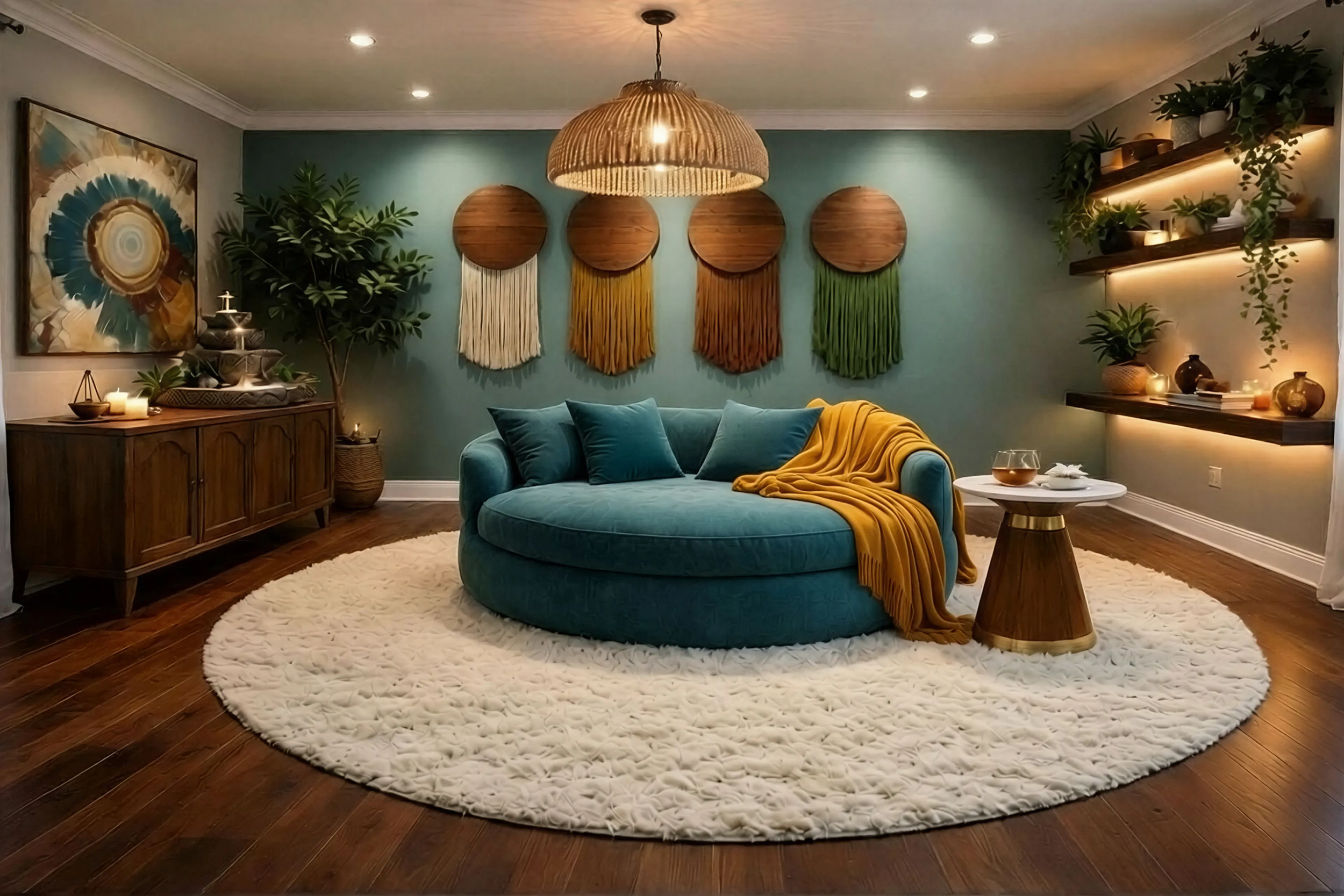
You've probably walked into a room and immediately felt something. A calm you couldn't explain. A tension that made you want to leave. A sense that the space fit — or didn't.
That feeling isn't just aesthetic. It's neurological. And it's exactly what restorative design addresses.
What is restorative design?
Restorative design is an approach to interior design that considers how a space affects the people living in it — not just how it looks, but how it feels, functions, and supports wellbeing.
It goes beyond selecting furniture and choosing paint colors. Restorative design looks at the whole person: how they move through their day, how they rest, how they gather, how they decompress, and what the environment is asking of their brain and body.
The goal is simple: a home that doesn't just look beautiful but actually works for the people inside it.
The science behind it.
Neuroaesthetics is the study of how our surroundings affect our brain, behavior, and well-being. It's an emerging field at the intersection of neuroscience, psychology, and design — and it's giving us language for something people have always intuitively known.
Your brain doesn't stop processing when you walk through your front door. It reads every surface, every object, every shift in light. It registers clutter as unfinished work. It responds to color, texture, acoustics, and spatial proportion — often without your conscious awareness.
Research has associated cluttered environments with elevated stress hormones and reduced ability to focus. Studies show that lighting affects mood, sleep quality, and cognitive function. The layout of a space — how you move through it, whether it encourages gathering or isolation — shapes how families interact, how children learn, and how individuals recover from the demands of daily life.
The Energic Dimension
Beyond the science, there's something else at work in our spaces.
Clutter holds energy. Objects carry meaning. A room that hasn't been edited in years may be holding onto versions of yourself you've already moved past. What sits in your space can reflect where you are — mentally, emotionally, physically, spiritually.
Restorative design honors this. It asks not just what you want your home to look like, but what you want your home to feel like. And more importantly: what is your home asking of you right now?
What Restorative Design Addresses
In practice, a restorative design approach considers:
Visual clutter and cognitive load: Every object in a room demands your attention. When there's too much, the cumulative weight feels like stress — even when you can't name the source.
Light: Natural and artificial light affect mood, energy, focus, and sleep. Most homes are dramatically underlit — or lit in ways that work against the body's natural rhythms.
Sensory experience: Texture, sound, scent, and temperature all register in the body. A space that feels cold, harsh, or acoustically overwhelming creates a low-grade stress that accumulates over time.
Flow and function: How you move through a space matters. Friction in daily routines — a door that opens the wrong way, a room that doesn't support how you actually use it — creates small stresses that add up.
Rest and restoration: Every home should have space designated for genuine recovery. A bedroom that signals rest. A corner designed for stillness. A room that gives you permission to decompress.
Connection: Spaces that bring people together — or unintentionally keep them apart — shape how families function and how individuals experience belonging.
Where to start.
You don't need a renovation to begin.
The most accessible entry point is an edit. Before you buy, add, or redesign anything — look at what's already there. What is the space asking of you? What could be released? Where does the room feel heavy, and where does it breathe?
If you're not sure where to start, the 7-Day Home Edit was designed for exactly this moment. It walks you through your home one room at a time — not as a purge, but as a practice. Room by room, day by day, with intention.
[Download the free 7-Day Home Edit checklist →]